Andropause: The “Male Menopause”
PHP
Aesthetic-Wellness
Insights & Patient Education
Andropause: The “Male Menopause”, Skin and Healthy Ageing
We talk a great deal about menopause — and rightly so. But men experience their own gradual hormonal shift, and it too shows in the skin. Here is a calm, evidence-based look at what changes, and how to age well through it.
Most men never notice a single turning point. There is no clear event, no obvious date — just a slow sense, somewhere in midlife, that energy, sleep, body and skin are not quite what they were. Much of it is simply put down to getting older. Some of it is worth understanding properly.
What Andropause Actually Is
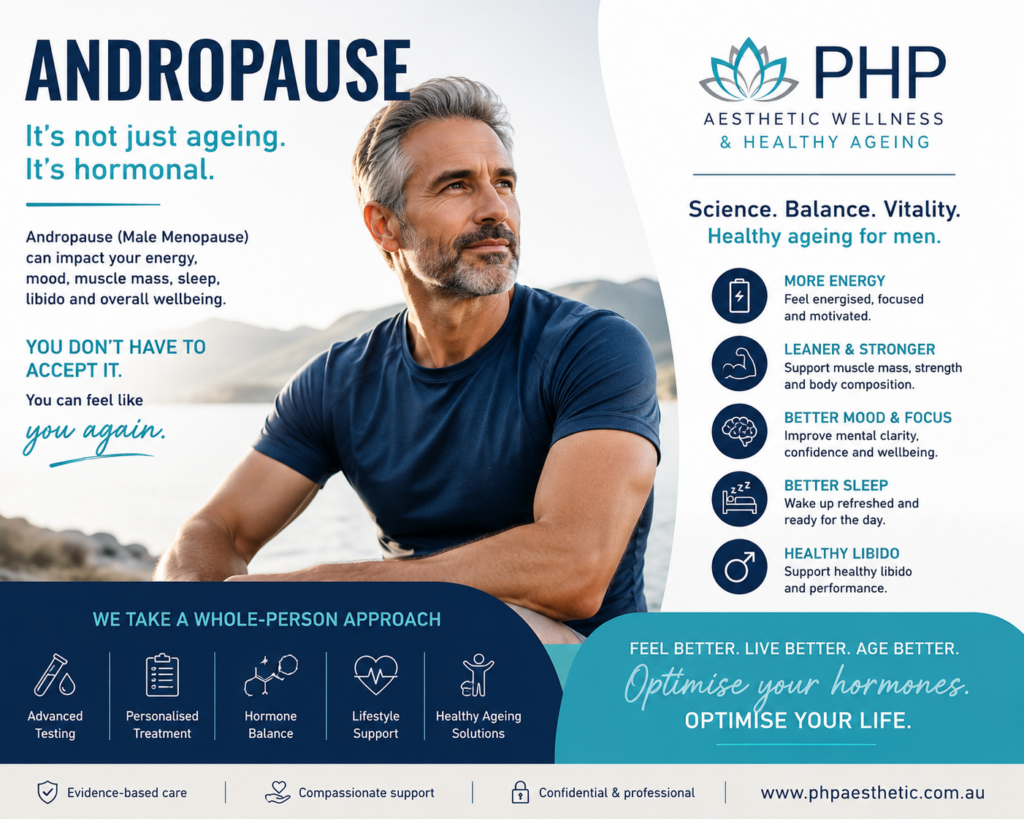
Unlike menopause, andropause is not a sudden, defined event. Sometimes called late-onset hypogonadism or, loosely, the “male menopause”, it describes the gradual decline in testosterone that occurs with age — roughly one per cent a year from around the late thirties or forties. Because the change is slow and varies so much between individuals, many men never identify a clear turning point, and symptoms are often attributed to stress or simply to ageing.
It is worth being honest that the term itself is medically contested. A good deal of what gets labelled “andropause” is really the result of lifestyle, poor sleep, weight gain, stress or low mood rather than hormones alone. That is precisely why proper assessment matters, and why this is never a self-diagnosis — the broader symptoms deserve a doctor’s attention, not assumptions.
What Happens to Men’s Skin
Testosterone influences skin much as oestrogen does for women. As levels decline, men see reduced collagen and a gradual loss of firmness, thinner and less elastic skin over time, more pronounced lines, jowling and under-eye hollowing, and often a loss of the healthy glow that firmer, well-supported skin provides.
There is an interesting difference, though. Men begin with thicker, more collagen-rich skin than women, so these changes tend to appear later — but once they do, they can seem to arrive quite suddenly, because the earlier buffer masked them. Alongside the visible changes, men frequently report fatigue, lower mood, reduced libido, poorer sleep, loss of muscle and increased abdominal fat — all of which belong to the wider picture, and to the wider conversation with a doctor.
Aesthetic care addresses the skin and how a man feels in it. It does not treat hormones — and being clear about that distinction is what makes the advice trustworthy.
Where Aesthetic Wellness Fits
The honest framing is the same one we use for menopause. Treatments support skin quality, facial changes, confidence and healthy ageing — working alongside good medical care, never instead of it. Two themes tend to matter most to men.
Skin Quality
Approaches such as mesotherapy, skin boosters, collagen-stimulating treatments and quality medical-grade skincare support hydration, firmness and resilience — the qualities that decline as testosterone falls.
Natural Results
Most men want to look refreshed rather than “done”. The aim is subtle, undetectable improvement — looking like a well-rested version of yourself, not someone who has obviously had work.
Prevention
Consistent, low-intensity care that protects skin quality over years fits the longevity principle of prevention over correction — maintenance rather than dramatic intervention.
Seen Through the Lens of Healthy Ageing
This is, at heart, a healthy-ageing story rather than a vanity one — and it is often a more comfortable entry point for men, who tend to respond to the language of maintenance, performance and prevention. The foundations that protect skin also protect health more broadly: regular resistance training and activity, adequate protein, good sleep, managing stress and alcohol, and daily sun protection. These do more over the years than any single treatment, and they support the very things — muscle, mood, skin, energy — that men notice declining.
Framed this way, caring for your skin in midlife is not indulgence. It is one visible, manageable part of ageing well, with confidence and vitality intact.
The Medical Boundary Worth Respecting
If a man has genuine symptoms of low testosterone, that is a medical matter — assessed by a GP or endocrinologist, confirmed with blood tests, and managed accordingly. Testosterone replacement therapy (TRT) is a prescription-only treatment with real benefits for the right patients, but also real risks and monitoring requirements. It is a decision that sits firmly with a doctor, not a clinic corridor or an online questionnaire. Our role begins and ends with your skin and wellbeing; for the hormonal picture, we will always encourage you to speak with your doctor.
Where this shows up at PHP
Our consultation offers men a calm, judgement-free space to understand what is happening to their skin and to build a considered plan around skin quality and healthy ageing — tailored to how you want to look and feel, never a one-size-fits-all package.
Every consultation includes
3D LifeViz imaging by Quantificare
, giving a precise, objective picture of your skin and letting us visualise the projected outcome together — so decisions are based on clear evidence you can actually see.
The Honest Summary
Andropause is real in the sense that testosterone declines gradually with age, and that decline shows in the skin as surely as it does in energy or sleep. But it is slow, individual, and easily confused with lifestyle factors — so the hormonal side belongs with a doctor. What aesthetic wellness offers is honest and specific: support for skin quality, natural and undetectable results, and a prevention-minded approach that fits the broader work of ageing well. For men, as for women, the conversation is overdue — and it deserves to be had calmly, without stigma, and grounded in evidence.
Further Reading
Authoritative sources on male hormonal ageing, skin quality and healthy ageing.
- NHS.
Guidance on the “male menopause” — a clear, patient-facing overview of testosterone decline and its causes. - British Society for Sexual Medicine (BSSM).
Guidelines on the assessment and management of testosterone deficiency in adult men. - Endocrine Society.
Clinical practice guideline on testosterone therapy in men with hypogonadism. - Dréno B, et al.
Reviews on dermo-cosmetics and evidence-based topical actives for skin quality. - Photoprotection evidence base.
Consensus literature on daily broad-spectrum SPF in preserving skin quality and elasticity.
This article is for general information and is not a substitute for personalised medical or aesthetic advice, nor guidance on any medication. Testosterone replacement therapy is prescription-only; decisions about it should be made with a GP or endocrinologist. To discuss your skin, book a consultation with our team.