
Skincare Ingredients Guide
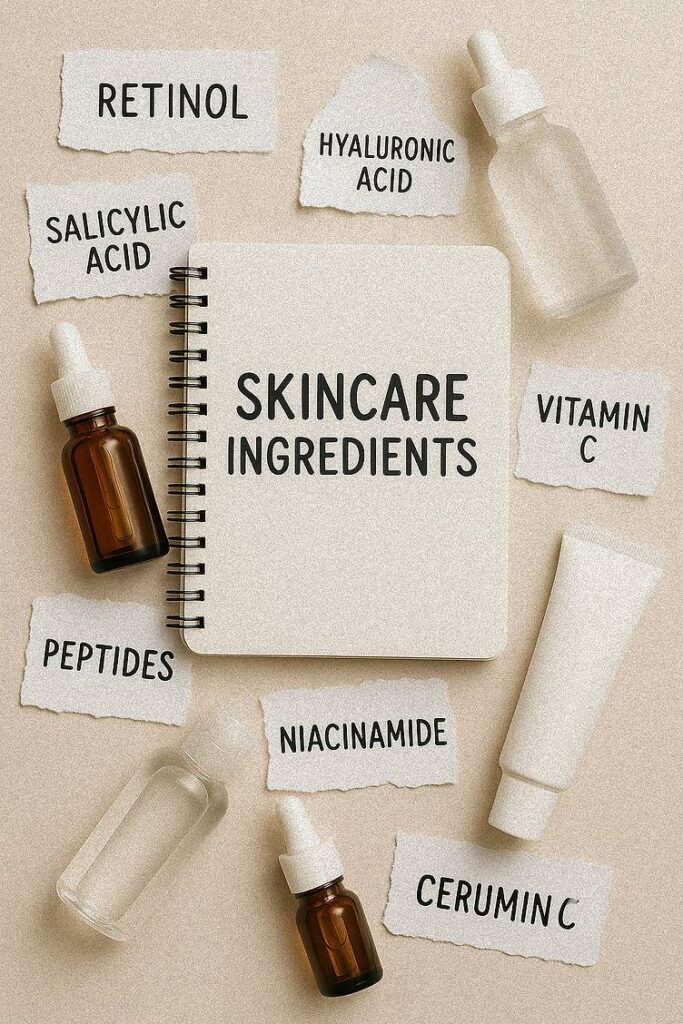
Skin Health · Education
The Skincare Ingredient Cheat Sheet
Matching actives to what your skin actually needs — not to what the marketing says.
Most people choose skincare based on marketing. Far fewer choose it based on what their skin actually needs. The result is a bathroom shelf full of half-used bottles, a lighter wallet, and sometimes a more irritated complexion than when they started.
It helps to stop thinking of active ingredients as “products” and start thinking of them as a toolkit. Each active solves a specific problem. Reach for the right one and you see results. Reach for the wrong one and, at best, you have wasted money; at worst, you have compromised your skin barrier.
This guide is the cheat sheet we wish more people had before they started spending. It is not a substitute for a professional consultation, but it will help you understand why your skin reacts the way it does, and how to shop with intention rather than hope.
| Ingredient | Best for | Also good for | Helps with |
|---|---|---|---|
| Retinoids | Wrinkles | Breakouts | Discolouration |
| Niacinamide | Enlarged pores | Weak skin barrier | Uneven tone |
| Vitamin C | Sun damage | Discolouration | Wrinkles |
| Peptides | Loss of firmness | Wrinkles | Dryness |
| BHA exfoliant | Breakouts & rough texture | Wrinkles | Dullness |
| AHA exfoliant | Uneven tone & texture | Wrinkles | Dullness |
| Azelaic acid | Redness | Breakouts | Sensitivity |
| Hyaluronic acid | Dryness | Wrinkles | Weak skin barrier |
A closer look at each active
Retinoids are the most studied anti-ageing ingredient available over the counter. They encourage skin cell turnover and support collagen, which is why they help with fine lines, breakouts and pigmentation alike. They also demand patience and a gradual introduction, as they can irritate skin that is pushed too hard, too fast.
Niacinamide is one of the most versatile and well-tolerated actives. It supports the skin barrier, helps regulate oil, and over time can improve the look of enlarged pores and uneven tone. It pairs well with almost everything, which makes it a sensible starting point for many people.
Vitamin C is an antioxidant that helps defend the skin against environmental damage and supports a brighter, more even complexion. It is most associated with addressing sun damage and discolouration, and works particularly well alongside daily sun protection.
Peptides are signalling molecules that support firmness and hydration. They are gentle, which makes them a good option for those who want to support ageing skin without the irritation some stronger actives can cause.
BHA (salicylic acid) is oil-soluble, so it works inside the pore. That makes it the go-to for breakouts and rough, congested texture, with the added benefit of restoring radiance to dull skin.
AHA (such as glycolic or lactic acid) works on the skin’s surface to address uneven tone and rough texture, leaving skin smoother and brighter. Because it increases sun sensitivity, daytime SPF is non-negotiable when using it.
Azelaic acid is a quietly excellent ingredient for redness, sensitivity and breakouts. It is well tolerated by reactive skin and is often recommended where calming the skin matters as much as treating it.
Hyaluronic acid does not exfoliate or resurface; it hydrates. It binds water in the skin to improve plumpness and comfort, and supports a healthier barrier. It is a supporting player that makes everything else work better, rather than a fix on its own.
Why this matters more than people think
Understanding the toolkit changes how you approach skincare in three practical ways.
It explains why a so-called miracle product can leave your skin worse, not better. More often than not, you have simply used a tool built for someone else’s problem.
It is also the reason a good practitioner asks what you are actually trying to fix before recommending anything. The concern comes first; the product follows.
And it turns skincare shopping from guesswork into a quick, informed decision. You do not need a ten-step routine. You need two or three ingredients that match your genuine skin concerns, used consistently, with the patience to let them work.
Skincare literacy is simply informed consumption
There is nothing vain about understanding what you put on your skin. It is the same diligence you would apply before spending money on anything else, with the added consideration that your skin barrier is involved. Knowing what an ingredient does, and why, protects both your results and your investment.
Where professional treatment fits in
At-home actives do a great deal of the work, but they are only part of the picture. In-clinic treatments can address concerns that creams cannot reach, and a professional assessment ensures the actives you use at home are the right ones for your skin, layered in the right order, at the right strength. The most effective routines usually combine sensible at-home care with periodic professional input, and a wider focus on the foundations of healthy skin: sun protection, sleep, nutrition and hydration.
If you would like a personalised assessment of your skin and a routine built around your actual concerns rather than marketing claims, our team would be glad to help.
This article is for general educational purposes and is not a substitute for individual medical or dermatological advice. If you have a specific skin condition or concern, please book a consultation for tailored guidance.