
Visceral Fat: Why it Matters More Than the Mirror Suggests
Visceral Fat: Why It Matters More Than the Mirror Suggests
Not all body fat behaves the same way. Here’s what visceral fat actually is, why it’s linked to real health risk, and what the evidence shows genuinely works to reduce it.
Dr Philippe Hamida-Pisal
· Founder, PHP Aesthetic-Wellness
Most people think about body fat in terms of how it looks — where it sits, how it feels, whether clothes fit the way they used to. But the fat that matters most for your long-term health isn’t always the fat you can see or pinch. It’s the fat you can’t, sitting deep inside the abdomen, wrapped around the organs themselves.
That’s visceral fat. And the evidence on it is now clear enough to say something most people don’t expect: a slim-looking person can carry a meaningful amount of it, and someone carrying more visible weight may have less of it than you’d assume. Waist size matters more here than the number on the scale.
What Visceral Fat Actually Is
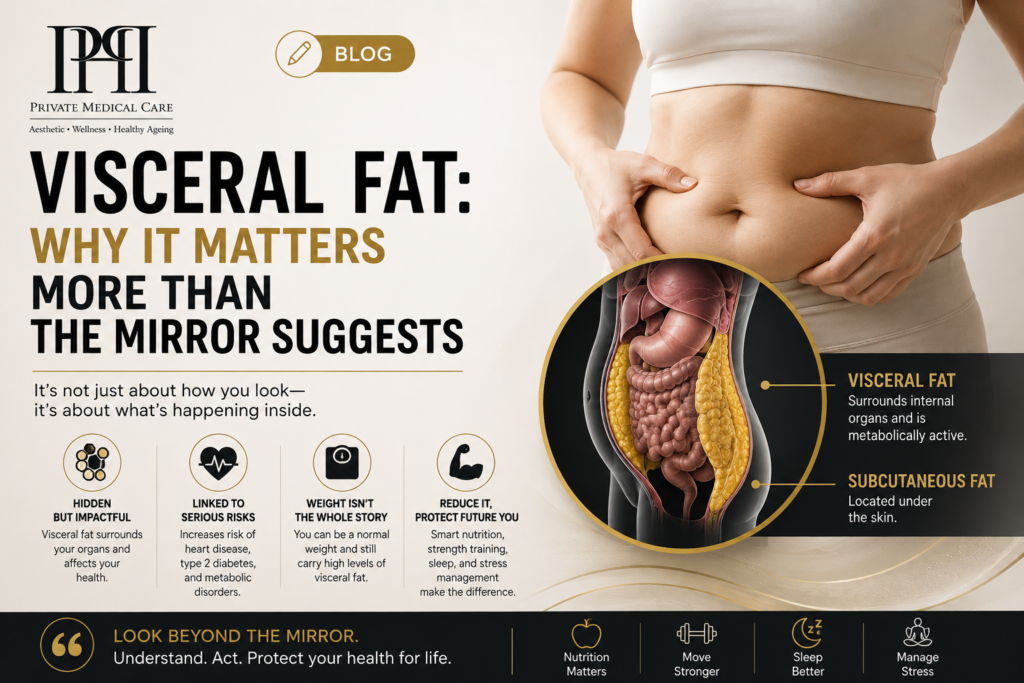
There are two broad types of fat in the body, and they don’t behave the same way. Subcutaneous fat sits just beneath the skin — it’s what you can pinch at the belly, hips, or thighs, and in normal amounts it’s largely protective, providing insulation and energy storage. Visceral fat is different. It sits deeper, packed around the liver, intestines, and other abdominal organs, and a small amount of it is completely normal and even useful.
The problem is what happens when there’s too much of it. Visceral fat isn’t inert storage — it behaves almost like its own active organ, constantly releasing inflammatory compounds and fatty acids directly into the bloodstream that runs to the liver. That constant low-grade signalling is where the real risk comes from.
Why It’s Linked to Real Health Risk
The mechanism is worth understanding, because it explains why visceral fat gets treated differently from fat elsewhere in the body. Visceral fat cells release cytokines — inflammatory messenger proteins — that drive a state of chronic, low-grade inflammation throughout the body. Over time, that inflammation contributes to plaque build-up in the arteries, a major driver of heart attack and stroke risk, and it interferes with how effectively your cells respond to insulin, which is the underlying mechanism behind type 2 diabetes.
This is why waist circumference has emerged as a more telling indicator of cardiometabolic risk than body weight alone. Two people can weigh the same and look similar, while carrying very different amounts of visceral fat — and the one carrying more of it is working with a meaningfully higher health risk, even if nothing about their appearance suggests it.
What the Evidence Actually Shows Works
This is where it’s worth being precise, because visceral fat responds differently to different interventions than fat elsewhere on the body — and not every popular approach is equally well supported.
Exercise has some of the clearest evidence behind it.
Structured exercise programmes, including both aerobic training and resistance training, have been shown in randomised controlled trials to meaningfully reduce visceral fat, measured directly using CT or MRI imaging rather than estimated from weight alone. Importantly, this effect can occur even without dramatic weight loss on the scale — visceral fat can shrink while total body weight changes relatively little, which is part of why focusing purely on weight can be misleading.
Caloric restriction works, but the evidence suggests it works best alongside exercise, not instead of it.
Diet-driven weight loss does reduce visceral fat, but pairing dietary change with regular exercise tends to produce a more favourable outcome for visceral fat specifically, compared with calorie restriction on its own.
Sleep and stress are easy to underestimate, but they’re mechanistically connected.
Chronic stress and poor sleep both raise cortisol, and elevated cortisol is linked to increased visceral fat storage specifically, more so than fat elsewhere in the body. This is one of the more overlooked levers in this conversation — it’s not just diet and exercise, but the basic physiological conditions that influence where the body chooses to store fat in the first place.
GLP-1 medications represent the newest, and currently best-evidenced, pharmaceutical option.
A systematic review and meta-analysis of GLP-1 receptor agonist trials found a clear, statistically significant reduction in visceral adipose tissue compared with control treatment, with the effect holding across people with and without type 2 diabetes. More recent trials combining GLP-1 medication with strategies to preserve lean muscle mass have shown even more favourable changes in body composition — losing visceral fat specifically, rather than losing weight indiscriminately, including muscle.
GLP-1 medications are genuinely effective for visceral fat reduction, but they are prescription medications with their own risks, side effects, and considerations — not a wellness product to be used casually or sourced outside a proper medical pathway. Any genuine use of these medications should involve a full medical assessment and ongoing clinical oversight, not a quick online order.
What Doesn’t Reliably Work
It’s worth naming this directly, since visceral fat is exactly the kind of concern that attracts a lot of marketing promising quick or localised fixes. Targeted “spot reduction” — exercises or treatments aimed at reducing fat in one specific area — does not have credible evidence behind it for visceral fat specifically; the body doesn’t preferentially burn fat from wherever you’re working a muscle. Detox teas, waist trainers, and most over-the-counter “fat burning” supplements have no meaningful evidence of reducing visceral fat at all. If a claim sounds fast and effortless, it’s worth treating with real scepticism — the interventions that actually move this number in clinical trials are exercise, sustainable dietary change, sleep and stress management, and, where medically appropriate, GLP-1 medication under proper supervision.
The Bigger Picture
Visceral fat is a useful example of something we think about often: how the body signals risk long before it becomes visible in a way most people would notice. It’s part of why we believe consultations — whether for an aesthetic concern or a broader health one — benefit from looking past the surface question. A waistline measurement, a conversation about sleep and stress, an honest look at what’s actually changed in someone’s lifestyle over the past year, often tells you more than appearance alone ever could.
None of this requires alarm. A small amount of visceral fat is entirely normal, and most people don’t need to obsess over it. But understanding what it is, why it matters, and what genuinely reduces it — rather than what’s simply marketed as reducing it — is a useful thing to know, whether or not you ever set foot in a clinic about it.

If something here raised a question specific to you, a proper consultation is always the better starting point than a search engine.
PHP Aesthetic-Wellness · 22 Harley Street, Suite 8, London W1G 9PL ·
contact@phpaesthetic.com